Technical Resource
Reconstitution Protocols

Product Protocols
BPC157 10mg / TB500 10mg
Clean rubber stoppers of both the peptide vial and bacteriostatic water with alcohol prep pads and allow them to air dry. Draw 3 mL of bacteriostatic water using a sterile syringe. Gently insert the needle into the rubber stopper of the peptide vial, aiming the stream along the side of the vial to avoid damaging the integrity of the peptide. Gently swirl or roll the filled peptide vial until the powder is completely dissolved—do not shake the vial. Store at 2–8°C away from direct light.
Recommended research protocol: Administer 1 mg subcutaneously once daily for five days, followed by no dose for two days, and repeat as required for research studies.
Retatrutide 10mg
Clean rubber stoppers of both the peptide vial and bacteriostatic water with alcohol prep pads and allow them to air dry. Draw 2 mL of bacteriostatic water using a sterile syringe. Gently insert the needle into the rubber stopper of the peptide vial, aiming the stream along the side of the vial to avoid damaging the integrity of the peptide. Gently swirl or roll the filled peptide vial until the powder is completely dissolved—do not shake the vial. Store at 2–8°C away from direct light.
Recommended research protocol: Start with 0.25 mg subcutaneously every second day for 8 weeks. If well tolerated, the dose may be increased to 0.50 mg subcutaneously every second day for the remainder of the research period. Titrating the dose gradually is highly recommended in research settings.
GHK-Cu 50mg
Clean rubber stoppers of both the peptide vial and bacteriostatic water with alcohol prep pads and allow them to air dry. Draw 3 mL of bacteriostatic water using a sterile syringe. Gently insert the needle into the rubber stopper of the peptide vial, aiming the stream along the side of the vial to avoid damaging the integrity of the peptide. Gently swirl or roll the filled peptide vial until the powder is completely dissolved—do not shake the vial. Store at 2–8°C away from direct light.
Recommended research protocol: If well tolerated, administer 2 mg subcutaneously every day for five days, followed by no dose for two days, and repeat as required for the research period, avoiding injections in the abdominal area.
NAD+ 500mg
Clean rubber stoppers of both the peptide vial and bacteriostatic water with alcohol prep pads and allow them to air dry. Draw 5 mL of bacteriostatic water using a sterile syringe. Gently insert the needle into the rubber stopper of the peptide vial, aiming the stream along the side of the vial to avoid damaging the integrity of the peptide. Gently swirl or roll the filled peptide vial until the powder is completely dissolved—do not shake the vial. Store at 2–8°C away from direct light.
Recommended research protocol: If well tolerated, administer 35 mg subcutaneously every second day for the duration of the research period, avoiding injections in the abdominal area.
Tesamorelin 10mg / Ipamorelin 5mg
Clean rubber stoppers of both the peptide vial and bacteriostatic water with alcohol prep pads and allow them to air dry. Draw 3 mL of bacteriostatic water using a sterile syringe. Gently insert the needle into the rubber stopper of the peptide vial, aiming the stream along the side of the vial to avoid damaging the integrity of the peptide. Gently swirl or roll the filled peptide vial until the powder is completely dissolved—do not shake the vial. Store at 2–8°C away from direct light.
Recommended research protocol: Administer 0.50 mg subcutaneously once daily for five days, followed by two days with no dosing, and repeat as required for research studies. Titrating the dose gradually is highly recommended in research settings.
Best Practices
Scientific Handling Standards
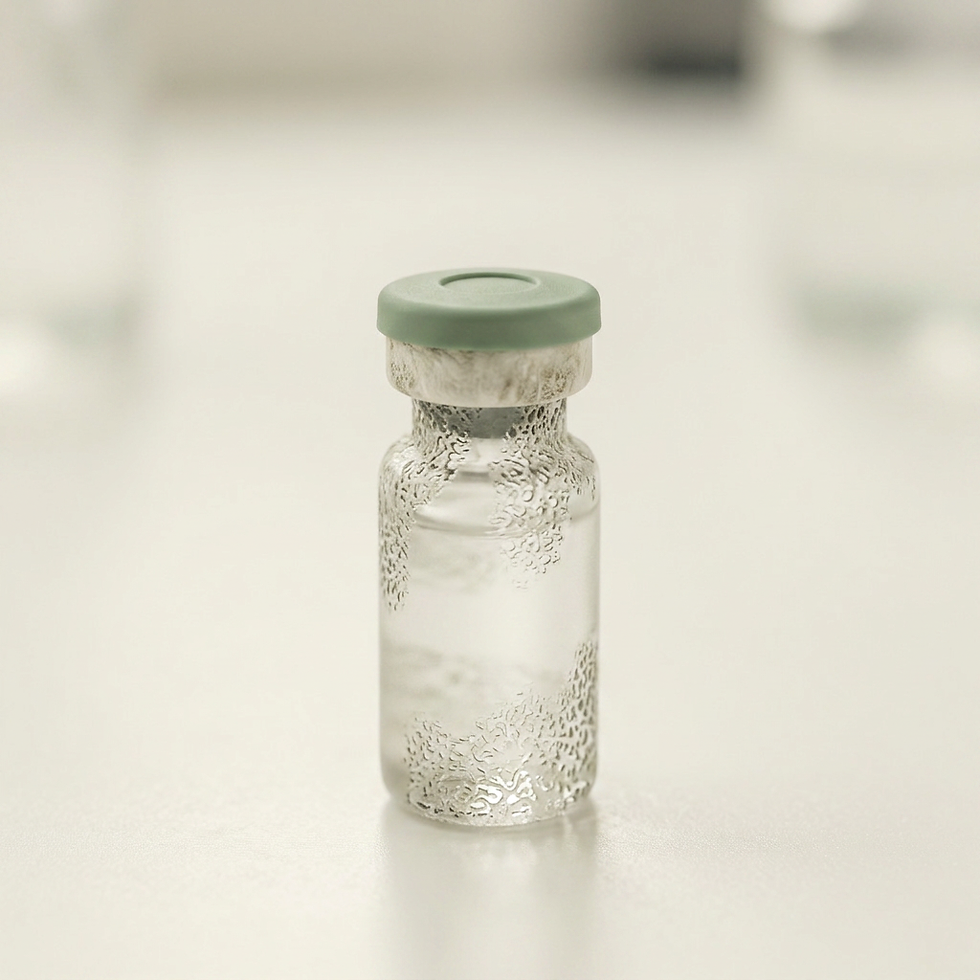
Once reconstituted with bacteriostatic water, compounds must be maintained at a steady 2-8°C to minimize thermal degradation. Preserving peptide integrity requires strict adherence to cold-chain storage and protection from light. Researchers should execute all procedures within a sterile laboratory environment to ensure the validity, stability, and reproducibility of experimental data.
Avoid Agitation: Swirl gently; never shake the vial to prevent protein denaturation.
Sanitization: Always swipe the septum with 70% isopropyl alcohol before solvent injection.
Protocol FAQ
What is the standard volume of bacteriostatic water for reconstitution?
How long can a reconstituted peptide be stored?
The standard volume depends on the peptide concentration and desired final dose. In most research settings, a range of 1–5 mL of bacteriostatic water is commonly used, as specified in the individual product protocol.
Once reconstituted, peptides should be used within 4-8 weeks if refrigerated at 2-8°C. Stability varies by peptide type; researchers should consult specific HPLC data for precise degradation timelines.
Should the reconstituted solution be swirled or shaken?
Peptides are delicate. Shaking can cause mechanical breakdown of the molecular bonds. Gently swirl the vial or allow it to sit until the solution is clear and fully dissolved.
Can different solvents be mixed for a single reconstitution?
Mixing solvents is generally discouraged in research environments as it can alter the pH and stability of the peptide. Bacteriostatic water is the validated standard for most laboratory applications.
Medical Disclaimer
Your Health is a Priority
The information provided on this page is for technical and research educational purposes only. It is always best practice and strongly advised to consult with your General Practitioner (GP) or a qualified healthcare professional regarding any health concerns, medical conditions, or before implementing any protocols discussed.